





Your source of inspiration to beautify from the inside out with ancient wisdom for your modern lifestyle.
Face by Design: Root Chakra Radiance
Welcome Back to the Beautify Series: Face By Design
If you have been following along with our Face by Design series, you know that I am on a journey — a sacred, embodied journey — from the base of the spine all the way up through the crown of the head, mapping the chakra system onto the face, the body, and the breath. Each week, I introduce you to a new energy center and explore how its intelligence lives not only in the body, but in the very architecture of the face.
Today we arrive at the root chakra: Muladhara the first chakra, the seat of our survival, safety, and groundedness. And while you may be surprised to learn that the root chakra has a direct conversation with the face, I promise you, by the end of this post, you will never look at your jaw, your chin, or the base of your neck quite the same way again.
Muladhara, मूलाधार, translated from Sanskrit as "root support," governs the base of the spine, the perineum, the legs, the feet, and the large intestine.
It is the chakra of earth energy: dense, stable, slow-moving, and deeply primal. It rules our sense of safety in the body, our relationship with the physical world, and our capacity to eliminate what no longer serves us.
In Ayurvedic and tantric philosophy, the body is a unified field. Energy does not compartmentalize itself into a neat little package. The root chakra's energy (and its imbalances) travel upward through the nadis, the energetic channels of the body, and they show up in the face in very specific ways.
When Muladhara is blocked or congested, we often see and feel:
🌀 Tension and holding patterns in the jaw and mandible.
🌀 Puffiness or stagnation along the jawline and lower chin.
🌀 Tightness in the platysma muscle of the neck, which connects directly to the throat and chest.
🌀 Dull, gray, or sallow skin tone in the lower third of the face.
🌀 A sense of heaviness or drooping in the lower facial tissues.
These are not random occurrences. They are the face literally holding the weight of what the root chakra has not been able to release.
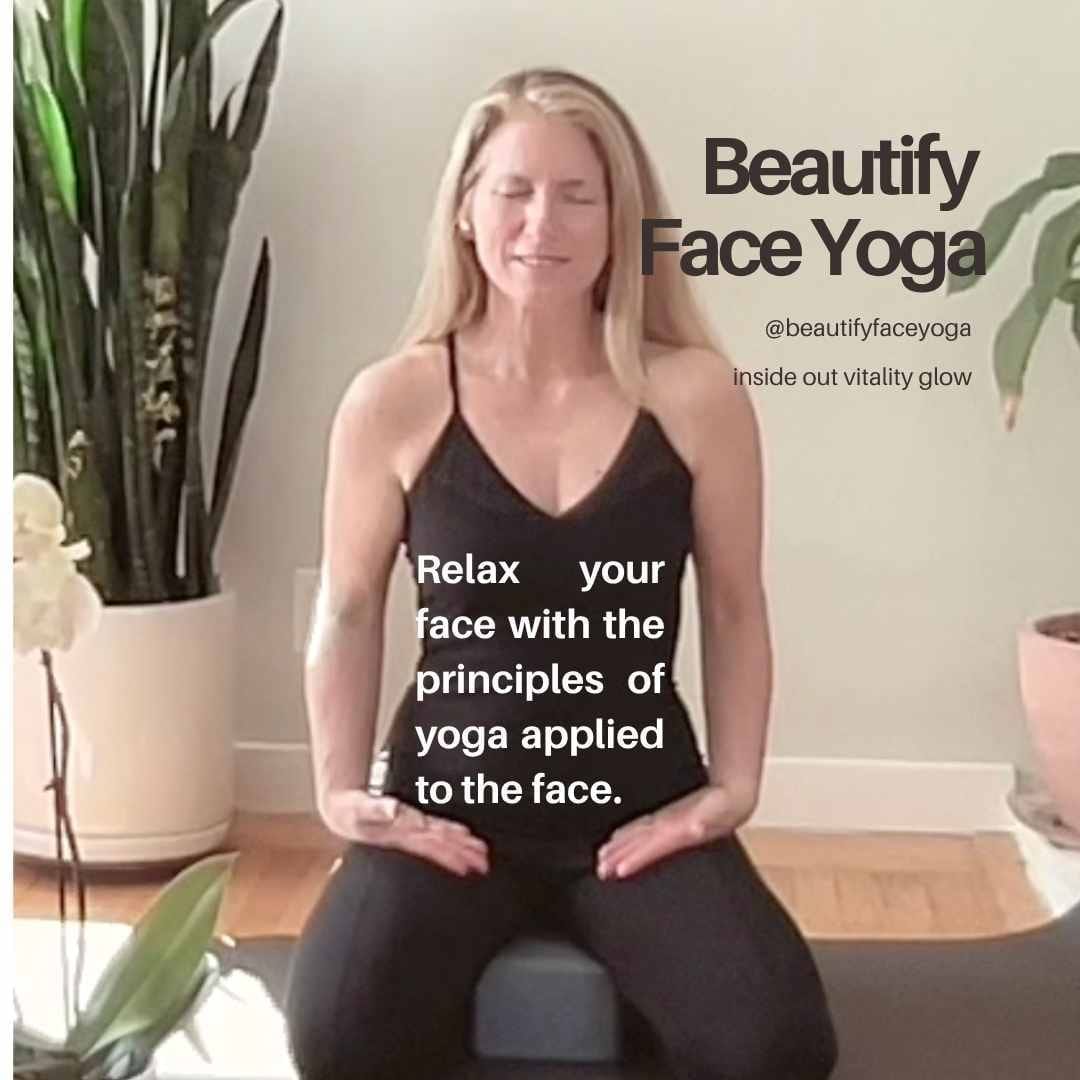
A seated position that is open can be a deeply releasing pose to attend to everyday. Invite relaxation into your body with openness in muladhara, the root chakra.
It is helpful to be "open" in each chakra zone, which we will explore in the coming weeks.
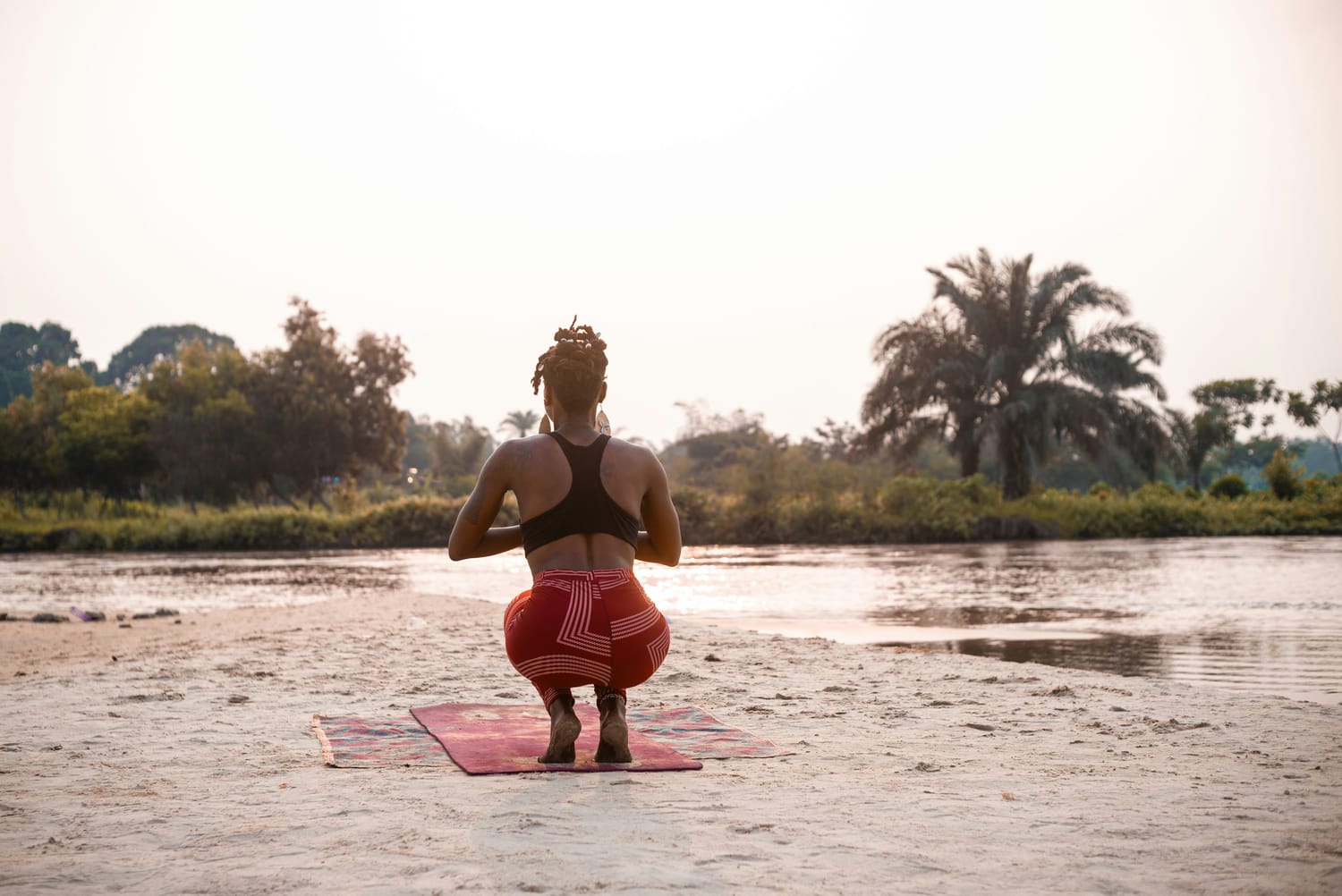
Photo Credit: Trésor Kande
Reflection In the Face: The Marma Points of the Root Chakra Region
In Ayurvedic marma point therapy, marma points are vital energy junctions — places where consciousness, prana, and physical tissue meet. Just as acupressure points on the meridian system can influence organ function and emotional states, marma points on the face and body are access portals to deeper energetic healing.
The marma points most closely associated with the root chakra region, and their facial counterparts, are the following:
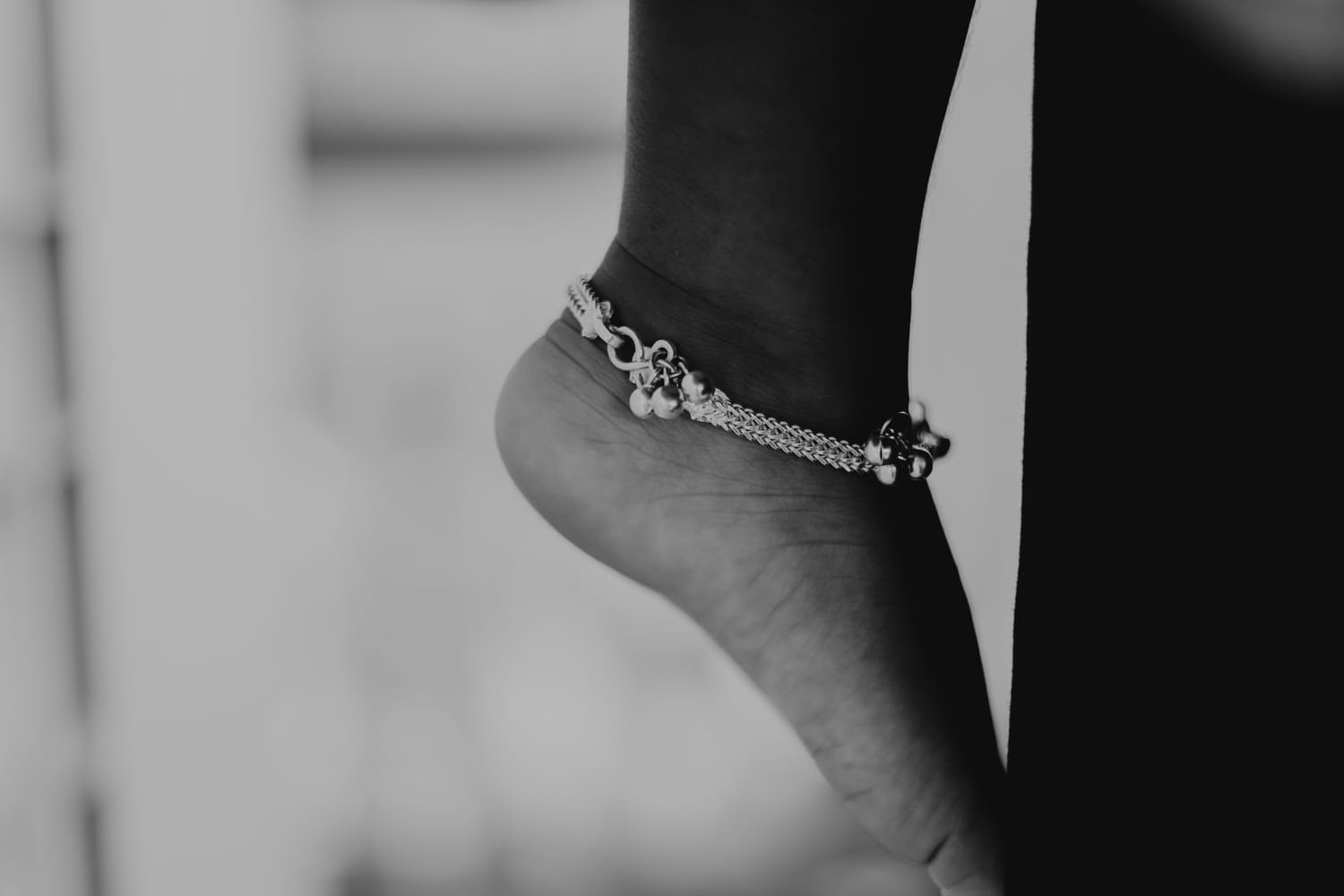
Gulpha Marma — Ankle Region
Gulpha, located at the ankle joint, is one of the primary root-stabilizing marma points of the lower body. In face mapping and Ayurvedic reflex theory, its facial correspondence lives in the lower jaw and the angle of the mandible. When you massage the jaw with intentionality, you are sending a signal all the way down the energy body, inviting the ankles, the foundation of your physical stance, to soften and release.
Kshipra Marma — Foot and Hand
Kshipra is located between the first and second toes on the foot, and its hand counterpart sits between the thumb and index finger. This point is a powerful release valve for stagnant energy in the lower body. Its facial reflection corresponds to the area just beneath the lower lip, along the mental crease. Gentle pressure here — applied with the index fingers in small circular movements — can initiate a release response that travels all the way down through the root.
Talhridaya Marma — Center of the Foot
This marma, located at the center of the sole of the foot, is deeply connected to grounding and the earth element. Its facial reflex can be found in the chin itself — the mentum — which in Chinese face mapping and Ayurvedic tradition represents the pelvis, the lower digestive tract, and the reproductive organs, all of which are Muladhara territory. Massaging the chin with slow, firm, downward strokes stimulates the energetic descent that invites the root to release.
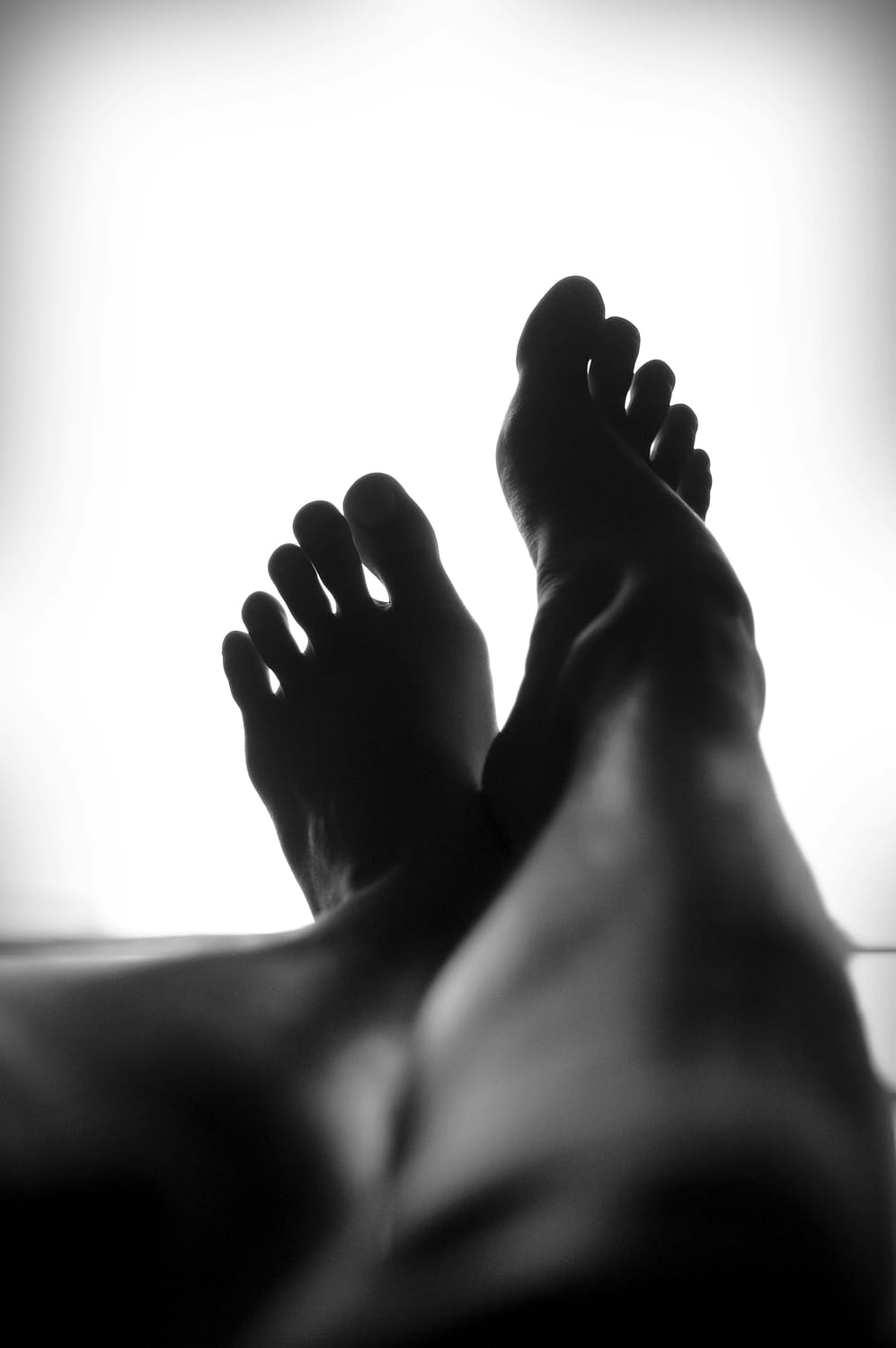
Photo Credit: https://unsplash.com/@srinivas_reddy__photography
Kurpara Marma — Elbow / Structural Support
While Kurpara is technically a joint marma of the elbow, it holds the structural intelligence of the body — the capacity to bear weight, to stay upright, to resist collapse. Its facial connection is the entire jawline, the architecture of the lower face that literally "holds up" the face in the same way the pelvis holds up the torso. Working the jawline is structural root chakra work.
The Mandible and the Chin — The Face's Root Zone
In the face yoga tradition, we speak of the lower third of the face — the region from the nose to the chin — as the body zone. It reflects gut health, elimination, reproductive vitality, and physical groundedness. The chin, jawline, and the submental region beneath the chin are the most direct access points we have in the face for root chakra stimulation and release.
Holding tension in the jaw is one of the most universally human things we do. We clench. We brace. We hold our words inside, our fears inside, our grief inside. The jaw is the gate. When we learn to soften it, we begin to release everything held below.
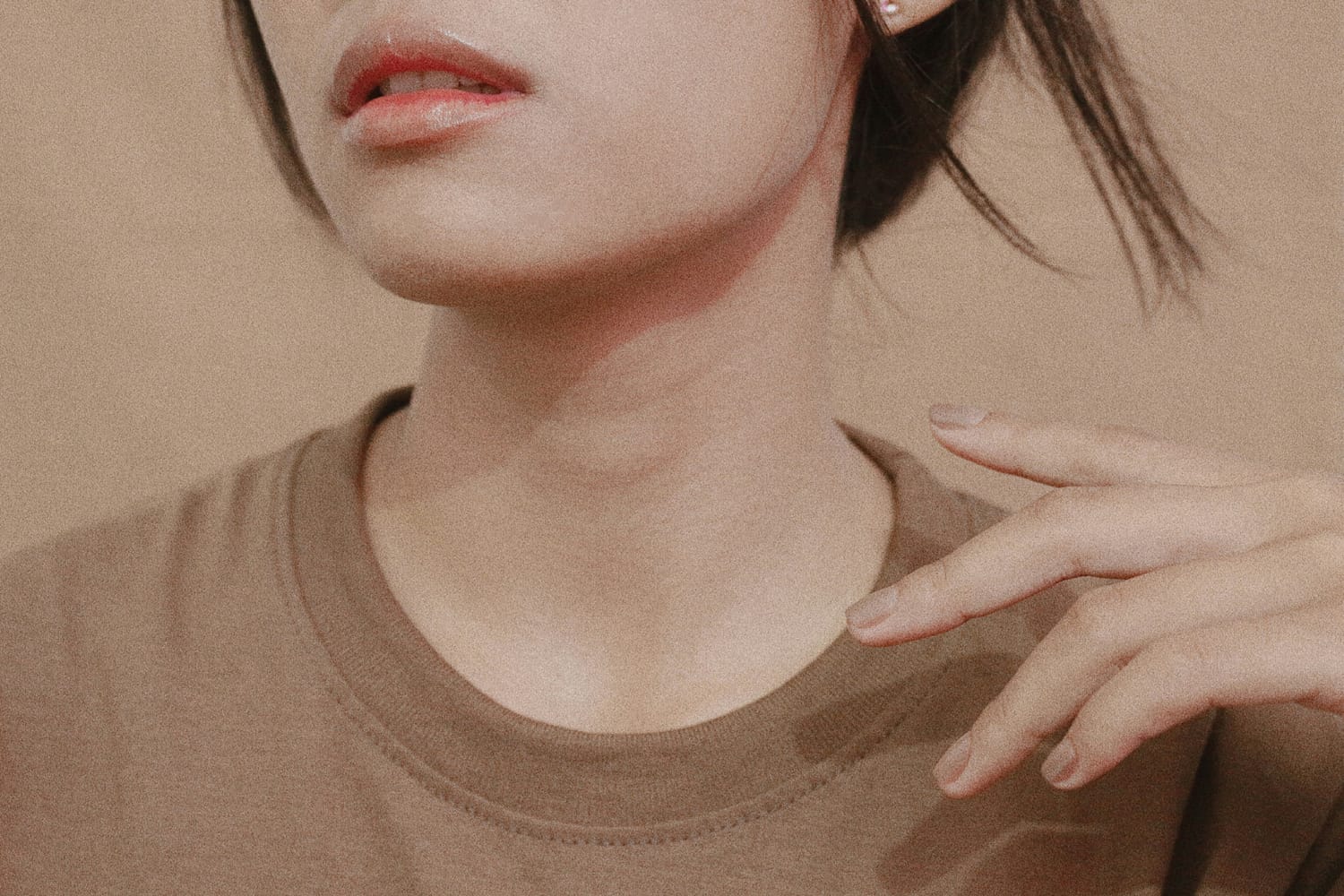
Image Credit: Mengkol Smile
The Beauty of Release — Why We Must Empty Before We Can Rise
Here is what I want you to sit with for a moment: you cannot build a flower on concrete.
If the root chakra is congested, dense, and unmoving, the energy of the higher chakras has nowhere to root itself. Bliss — the Ananda that lives at the crown — cannot descend into a body that has not learned to let go at the base. This is one of the most beautiful and humbling teachings of tantric philosophy.
The root chakra governs apana vayu, the downward-moving life force in Ayurveda. Apana is the energy of release, of elimination, of descent. It is what moves waste out of the body. It is what releases the baby from the womb. It is what moves grief out of the tissues and old stories out of the belly. Apana is not glamorous work, but it is the most sacred work there is, because without it, nothing new can enter.
When we work the root chakra — through movement, through marma, through face yoga — we are literally practicing the art of letting go. We are training the body to trust the downward current of release, so that the upward current of shakti can rise freely, unobstructed, through the sacral, the solar plexus, the heart, the throat, the third eye, and finally into the luminous crown.
This is the path of Beautify Face Yoga
We do not chase the glow.
We release what is covering it.

Face Yoga Poses for the Root Chakra
These face yoga practices target the lower third of the face and the neck, activating the energetic root zone and encouraging release through movement, breath, and intentional pressure.
The Lion's Jaw — Simhasana for the Face
This is perhaps the most primal face yoga practice and one of the most powerful for root chakra release. Open your mouth as wide as possible. Extend the tongue fully downward toward the chin. Open the eyes wide and gaze upward. Hold for five to ten counts, then release completely and let the jaw hang open, soft and heavy. Repeat three to five times.
The Lion's Jaw releases the deep pterygoid muscles of the jaw, decompresses the temporomandibular joint, and sends a powerful signal through the vagus nerve that it is safe to let go. In root chakra terms, this is the face equivalent of a primal roar — it shakes loose what has calcified in the base.
The Jaw Sculpt and Release
Place your fists beneath your chin with the knuckles pressing gently but firmly upward into the submental tissue. Now, press the tongue firmly to the roof of the mouth and hold while you slowly open the jaw against the resistance of your fists. Hold for ten counts. Release and let the jaw drop completely.
This pose activates the digastric, mylohyoid, and platysma muscles — the anatomical geography of the lower face that maps directly onto the root and sacral chakra zones. The resistance followed by complete release mirrors the energetic process of apana vayu: effort, then surrender.
The Neck Roll with Intention
Drop your chin to your chest. Slowly roll the head to the right shoulder, pause, breathe, and allow the left side of the neck to open and lengthen. Continue rolling back to center and to the left. Move slowly enough that you can feel each micro-release along the way.
The neck carries the accumulated tension of root and sacral chakra holding — it is the literal bridge between the body and the head, between the earth and the sky. Freeing the neck with breath and intention creates a channel through which root energy can begin to rise.
The Chin Tuck and Jaw Press
Tuck the chin slightly toward the chest to elongate the back of the neck. Place three fingers on the chin and apply gentle backward pressure as you simultaneously push the chin forward against the resistance of your fingers. Hold for ten counts. Release.
This strengthens the deep cervical flexors and massages the submental marma region, while the isometric resistance pattern activates the grounding, stabilizing qualities of Muladhara.
Submental Lymphatic Sweep
Using the backs of your hands or your fingertips, sweep firmly from the center of the chin outward toward the ears and down the neck toward the collarbone. This is Ayurvedic lymphatic drainage for the lower face and corresponds directly to the elimination function of the root chakra. Repeat eight to ten times with slow, intentional strokes. Breathe out on each sweep, allowing the exhale to carry the released energy downward and out.
Body Practices That Ignite and Release the Root Chakra
Face yoga does not live in isolation. The face is a reflection of the whole body, and the whole body must be invited into root chakra activation for the work to be complete. These movement practices are the body-level complement to everything you have been doing with your face.
Chair Pose and Squats — Utkatasana and the Earth Squat
Squatting is arguably the most primal human posture, and it is one of the most powerful root chakra activators available to us. In a traditional deep squat — heels on the floor, hips dropped below the knees, spine upright — we are literally bringing the base of the spine as close to the earth as possible. We are compressing and then releasing the entire pelvic floor, the perineum, the seat of Muladhara.
Begin standing with your feet hip-width apart. Lower slowly into a squat as deeply as your body allows. Let your hands press together at the heart in Anjali Mudra. Breathe here for five to ten breaths, allowing the pelvic floor to soften on each exhale. Rise on an inhale, pressing through the heels.
If a full squat is not accessible, Utkatasana — Chair Pose — offers the same energetic activation with more structural support. Bend the knees as if sitting into a chair, keep the chest lifted, and breathe into the base of the spine. Feel the heat, the effort, the groundedness. This is Muladhara waking up.
Downward Facing Dog — Adho Mukha Svanasana
Downward Dog is a full-body root chakra practice. When the hands and feet are rooted firmly to the earth and the hips are lifted, you create an inversion of the energy body that draws stagnant root energy downward into release while simultaneously creating space for fresh prana to rise. The hamstrings, calves, and feet — all Muladhara territory — are actively stretched and stimulated.
Press your hands and feet firmly into the mat, spreading the fingers wide. Draw the sitting bones up toward the sky. Allow the head to hang heavy, releasing any tension you have been holding in the jaw and neck. With each exhale, soften the facial muscles completely. Stay for five to ten breaths. Let the earth hold you.
Warrior I and Warrior II — Virabhadrasana
The Warrior poses are root chakra medicine. Both feet rooted on the earth. The legs strong, stable, immovable. The spine rising up from that deep foundation like a tree drawing on the nourishment of the soil.
In Warrior I, feel the back heel pressing firmly into the earth as the hips square forward. In Warrior II, feel the expansive opening of the inner groin and the steadiness of the legs as the arms extend wide. In both poses, allow the jaw to be completely soft. Let the face be still. Notice how the strength of the body's root can hold the face in peace — you do not need to clench, because the legs are doing the work.
After holding each warrior for five to eight breaths, release into a forward fold. Let the head drop. Let the face hang toward the earth. Breathe out every bit of tension that has gathered in the jaw, the neck, and the brow. This moment of release after the effort of the warrior is the energetic equivalent of apana vayu — the work has moved the energy, and now the body can let it go.

Angela Rosoff is an Ayurveda Digestive Health Practitioner, a yoga teacher, and a certified Face Yoga Method teacher. She helps women over 40 beautify from the inside out by discovering their intuitive nature so they can recognize their unique inner language that helps them navigate the world. Through working with hundreds of women, Angela has recognized that so many women do not yet recognize their intuitive nature. Within the ethos of Ayurveda and Yoga, we find a depth of holistic science that teaches the wisdom of the ages within the embodiment of of our intuitive state. To listen, see, and recognize our personal directives for drawing out the inner beauty through practical applications of yoga, face yoga, nourishment, and self-care.
Intutive Beautiy is about moving into a state of self-awareness and on into self-acceptance. It is only then that women can truly move into a state of meaningful beautification with personal and spiritual development. It comes as no surprise when our vitality is visually recognized, you see the inner glow, the spiritual nature, and the distinct and unique beauty of each woman. She is magnetic and gorgeous!
Come back to this series so you can stay on the path to beautifying your own face by design!
Face by Design: Root Chakra Radiance
POST CATEGORY


I am so glad you are here! Enjoy a gentle note from me and feel free to reach out to me on Instagram by direct messsage @beautifyfaceyoga to receive a free meditation curated to your specific needs. Just let me know what you need and I will send you a voice note meditation to enliven your mindset so you can beautify from the inside out!
5 % of your purchase is donated to support climate change initiatives
Beautify Face Yoga © 2025